
Explore environmental science career opportunities beyond research. Discover roles in ESG, policy, GIS and consulting, plus tips for jobs in India.
Introduction
You chose environmental science because you want to protect the Earth. Now someone comes up and asks, “So, you will be a researcher, right?”
Maybe not. Research is just one path. There are plenty of other paths out there as well.
This guide explains environmental science career opportunities that rarely come up in college talks. I will keep it simple. No heavy jargon. Just real roles, real skills, and a few smart tricks.
This is why it is so relevant today. Businesses have to disclose their environmental footprint. Cities require better air and water quality planning. Investors ask hard questions about carbon emissions. There is someone who should answer those questions. That someone could be you.
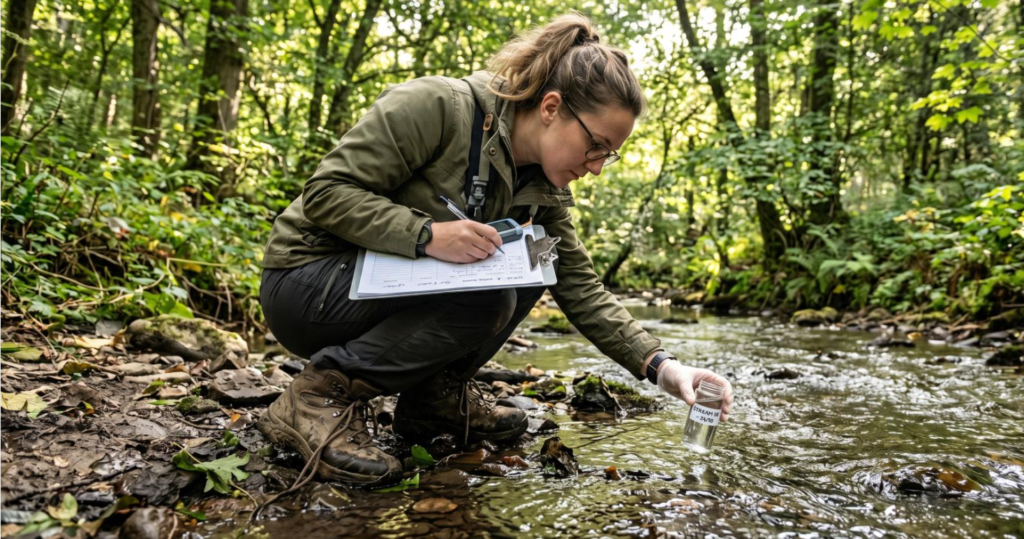
Why Environmental Science Career Opportunities Go Beyond the Lab
Research is a wonderful career choice. However, it is not for everyone since it requires patience, grant funding, and extended periods of time. Many postgraduates desire quicker results while others just love people more than petri dishes.
The good news? Your degree has equipped you with the ability to think systematically. You can analyze data. You can identify risk factors. You can explain complex issues using simple language. All industries need such skills.
So think of your degree as a toolkit. Not a single job title. When you see it that way, environmental science career opportunities stop looking narrow. They start looking wide open.
Careers in Environmental Science: 7 Paths Outside the Lab
Let us look at the main paths. Each one uses your science in a different way.
- Environmental Consultant: Help companies comply with green regulations. You do the environmental impact assessment and audit reports.
- ESG and Sustainability Analyst: Collect a firm’s information about its emissions, water usage, and waste. Turn it into investor reports.
- Policy Advisor: Work with think tanks or governmental agencies. You translate science into practical policy.
- Environmental Journalist or Writer: Communicate climate news in easy language. It is a genuine profession.
- Carbon Markets Analyst: Verify and calculate carbon credits. The industry is still new, but it is rapidly developing.
- Waste and Circular Economy Manager: Create solutions that recycle resources rather than dump them.
- GIS and Remote Sensing Analyst: Analyze satellite information on forests, floods, and pollution.
These environmental science career opportunities differ in pay, pace, and people. Some are desk-heavy. Others need regular field visits. Pick based on how you like to work. Do not pick based on what sounds impressive.
Environmental Science Jobs in India: Where Hiring Happens
Regulations on pollution, waste, and corporate reporting in India are becoming stringent. This implies constant demand for qualified professionals. Here are some recruitment zones:
- Pollution control boards and environmental ministries
- EIA and compliance consultants
- Big companies listing on their sustainability reporting
- Renewable energy and water technology companies
- NGOs and developmental agencies
- Corporate social responsibility departments of major corporations
- Entrepreneurial firms in waste management, solar power, and sustainable transportation
Here is a tip. Do not search only for environmental science jobs on job portals. Many environmental science career opportunities hide behind different titles. Try “sustainability executive,” “EHS officer,” “compliance associate,” or “ESG analyst.” You will find far more openings.
Why does this work? Recruiters write titles for the task, not the degree. So the task name is your real search term.
The Skill-Swap Trick: Rename What You Already Know
This is the idea most blogs skip about environmental science career opportunities. Your college skills already match market skills. They just have different labels. See the swap:
- Laboratory Sampling Becomes Auditing at Site Level
- Data Analysis via R or Python becomes ESG Dashboards
- Publishing Research Papers becomes Publishing Policy Briefs & Reports for Clients
- Literature Review Becomes Monitoring of Regulations
- Fieldwork Becomes Meetings with Stakeholders & Communities
See the pattern? You already own the skills. You only need new words on your CV.
Try this today. Open your resume. Replace every academic phrase with its job-market twin. This small edit can unlock environmental science career opportunities that looked closed before.
Environmental Science Career Options by Work Style
Not sure where you fit? Match the path to your personality.
- Love people? Then try community relations, CSR or policy.
- Love numbers? Then try ESG or carbon accounting.
- Love maps? Then try GIS and remote sensing.
- Love words? Then try environmental journalism or communications.
- Love action? Then try EHS, waste management or renewables.
Here is a quick test. Which task in college made you lose track of time? Start there. Interest beats salary in the first two years. Skills will bring the salary later. Strong environmental science career opportunities usually come to people who stay curious.
A Day in the Life: Two Quick Snapshots
Job roles sound vague to most people. Here are two easy diagrams.
The first ESG analyst begins her day by reviewing the information about the energy and waste from the plants of the company. Then, she analyzes and charts the information and writes down notes for the company’s leadership team. In the afternoon, she attends a conference call for the discussion of new reporting guidelines.
The GIS analyst begins his day with opening satellite images of the river basin. Then, he analyses the images in comparison with the previous year’s satellite images and draws areas where forested regions have diminished.
Both individuals do not work in laboratories. But they use environmental science daily.
Skills That Open More Environmental Science Career Opportunities
Your degree gets you the interview. Extra skills get you the offer. Add these to your list:
- Excel and Data Visualization: Clear graphs will dazzle the recruiter.
- QGIS GIS software: Plenty of free tutorials available.
- ESG systems: Study the fundamentals of BRSR and GRI reporting.
- Reporting Skills: Reports that are succinct and brief are highly valued.
- Basics of carbon accounting: A rapidly growing skill.
- Communication Skills: Communicating science to non-scientific audiences is a superpower.You do not need to learn everything. Pick two. Build them well. Even two new skills can widen your environmental science career opportunities.
Your 90-Day Starter Plan
Big goals feel scary. So break them down.
- Days 1-30: Select two roles. Study five actual role descriptions for both. Take note of the recurring skills.
- Days 31-60: Study one tool and one framework. Complete one small project. For example, map air pollution in your city.
- Days 61-90: Revise your resume and LinkedIn profile. Reach out to ten professionals for a brief discussion. Apply for internships.
Environmental science career opportunities reward people who start small and stay consistent. A single project beats ten unfinished courses.

Mistakes to Avoid
Many students slow themselves down. Watch out for these:
- Waiting for the “perfect” job title
- Ignoring internships because they pay little
- Skipping networking
- Learning tools without building anything
- Thinking a master’s degree is the only route
Fix even two of these, and your search gets easier.
Conclusion
Environmental science career opportunities go far beyond research. Policy, ESG, GIS, consultancy, and writing are activities that require your brain. Rebrand your abilities, create one project, and begin networking. The correct path will reveal itself, step by step.